How Long Does Dried Sea Moss Last? Storage and Mold

Short answer
We found no published standard shelf life for dried sea moss. Dry sea moss can still grow mold if it gets damp. Keep it dry and sealed, check for visible mold, dampness or an off smell each time, and throw out anything damp, spotted or musty.
How can you tell if dried sea moss has gone bad?
You cannot measure microbes at home, so use your senses and the condition of the package. Throw it out if you notice any of these:
- visible fuzzy or colored spots that were not there before
- a musty, sour or strongly “off” smell, beyond the normal sea smell
- damp, sticky or clumped pieces in a bag that was dry when you bought it
- a bag that has been left open or has condensation inside
An unchanged look or smell does not establish that it is safe, because the study below found yeast and mold in dried products by lab testing. If you are unsure about its condition, discard it.
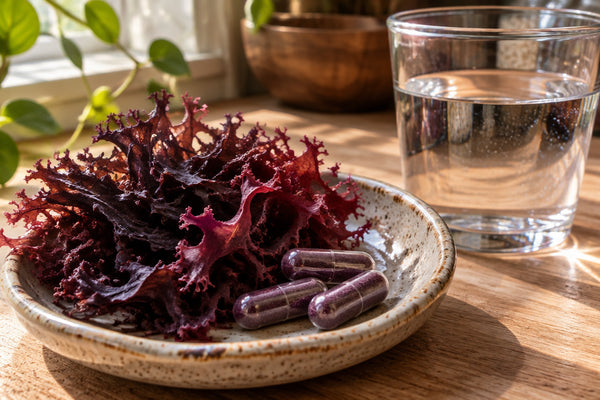
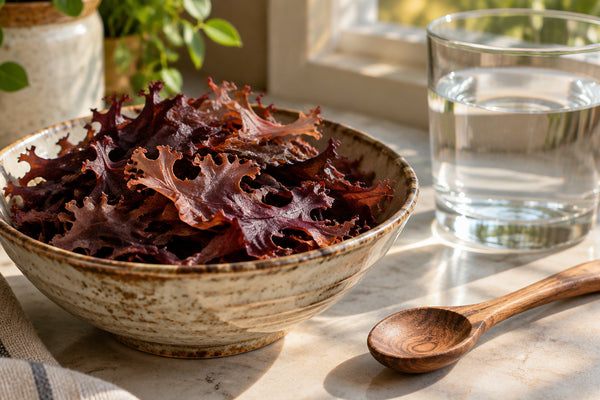
It helps to know what a good batch looks like when fresh, so you can spot a change. Our guide on how to identify real versus fake sea moss covers appearance.
How should you store dried sea moss?
The study did not test storage methods, so these steps are common food-handling practice rather than findings from it. They all aim at one thing: keeping moisture out.
- Keep it in an airtight container or a resealable bag with the air pressed out.
- Store it somewhere cool, dark and dry, away from the stove, dishwasher and sink.
- Use clean, dry hands or a dry spoon each time you take some out.
- Soak only what you need. Once soaked or blended into gel, it is a wet food and no longer a dry one.
Why is there no standard shelf life?
A 2026 Cornell AgriTech study in the Journal of Food Protection tested 66 commercial sea moss products bought from major US online retailers. Fifty-three of them were dried.
The researchers measured water activity, which shows how much free moisture is available to microbes. It ranged from 0.33 to 0.76 across the dried products. Yeast and mold were detected in the dried samples.
The authors concluded that the variability “highlights the need for additional research and evidence-based guidance” on storage and handling (Rejuso et al., 2026).
So dried does not mean sterile, and how you store the bag matters. If the package has a best-by date, treat it as the seller’s estimate, not a guarantee once the bag is open.
Is sea moss gel different?
Yes. In the same Cornell study, gels averaged a water activity of 0.98, far wetter than the dried products, so gel is the form to treat with more caution.
See how to make sea moss gel for preparation, and capsules versus gel if you would rather skip the storage question entirely.
What should you ask a seller before buying dried sea moss?
Ask where the moss was harvested, how it was dried and what testing was done.
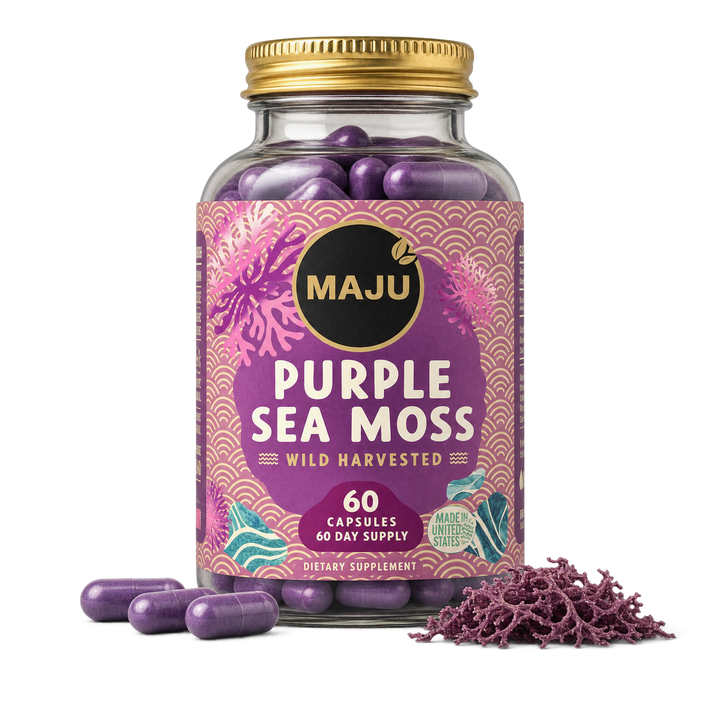
MAJU sells raw dried wild sea moss. Check the current product page for harvest and ingredient details before you buy.
References
- Rejuso A, Cobo M, Curran JE, Wang R, Humiston G, Worobo R, Vegdahl AC. Microbial and heavy metal analyses of commercially available sea moss and sea moss products. J Food Prot. 2026;89(11):100915. PMID 42710593
Written by Jennifer Wright, Content Editor at MAJU Superfoods. Researched and sourced under our editorial standards. Last updated November 2026.
These statements have not been evaluated by the Food and Drug Administration. This product is not intended to diagnose, treat, cure, or prevent any disease.
Ready to try Maju?
Browse our best sellers. Free US shipping on orders $75+.
Shop best sellers