Oregano Oil Tincture vs Oil: What's the Difference?

Short answer
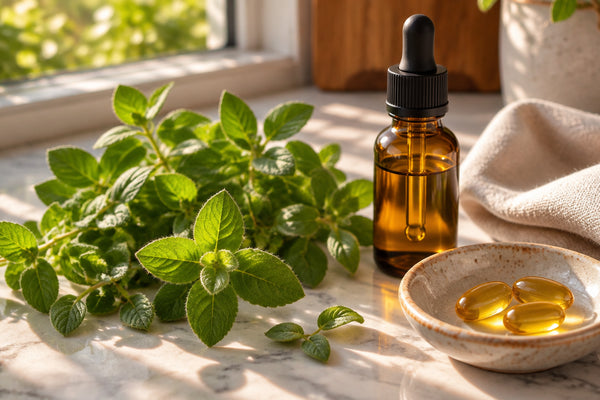
An oregano oil tincture is a liquid herbal extract, usually made with alcohol. Oregano oil supplements are concentrated oil, typically diluted in a carrier oil. They are different preparations, and strength varies by product, so compare the solvent, the stated carvacrol content and the use directions rather than the name on the front.
| Oregano tincture | Oregano oil supplement | |
|---|---|---|
| Base | Alcohol, glycerin or similar solvent | Carrier oil such as olive oil, or capsule fill |
| What it is | Extract of the herb in a solvent | Concentrated oregano oil, often standardized |
| Strength | Varies by herb ratio and solvent; often not stated | May state a carvacrol percentage |
| Typical label | Herbal extract, drops | Supplement Facts panel with serving size |
| Watch for | Alcohol content, no standardization | Spicy taste and burning, carrier oil allergies |
We found no head-to-head human trial comparing a tincture with an oregano oil supplement. Nothing we found shows that either one is more effective or better tolerated.
Who should check with a clinician before using either one?
Read the solvent first. A tincture made with alcohol is a poor fit for anyone avoiding alcohol.
Ask a healthcare professional before using any oregano product if you are pregnant or nursing, take prescription medication, have a health condition, or are allergic to plants in the mint family (Lamiaceae, which includes oregano).
Concentrated oregano preparations can also burn the mouth and upset the stomach. Our guide to oregano oil side effects covers what to expect.
Why two bottles of oregano extract can differ
A tincture is made by soaking plant material in a liquid such as alcohol or glycerin, then straining it. An oregano oil product is a concentrated oil, often standardized to a stated carvacrol percentage, diluted in a carrier oil and sold as drops or capsules.
Distilled oregano essential oil is a third preparation. Our guide on oil of oregano vs essential oil explains why the label's use directions matter.
The solvent changes what ends up in the bottle. One lab study tested extraction methods on three oregano types. The amount of carvacrol and other compounds recovered depended on the method and the solvent. Under heat reflux, an ethanol blend with glycerol or propylene glycol worked better than ethanol alone (PMID 25942003).
It was an analytical study of dried herb, not a test of retail products. It does show how two bottles called "oregano extract" can carry very different amounts.
What lab studies can and cannot tell you about oregano extracts
Most of the research on oregano extracts is done in test tubes. One study of an ethanol extract of Origanum vulgare found carvacrol and thymol as its main compounds. In cell and bacterial tests, the extract showed antioxidant and antibacterial activity and was toxic to cells (PMID 27051475).
Those results do not show what a tincture or an oil does after you swallow it, or any health outcome in people.
One safety study is worth knowing about because it tested an oregano preparation for toxicity. A 90-day study gave oregano essential oil to rats at up to 200 mg/kg body weight and found no treatment-related adverse effects. It was designed for food-contact safety, not supplement use (PMID 28065759). It does not set a human serving for a tincture or any supplement, so follow the product's own directions and ask a clinician if you are unsure.
Four label checks before you buy either one
- Solvent or carrier. Alcohol, glycerin and olive oil each suit different people.
- Carvacrol percentage. A tincture rarely states one. For why the number matters, see what carvacrol is.
- Serving size. With no Supplement Facts panel or use direction, you have nothing to measure against.
- Format. Capsules skip the taste; drops let you adjust the amount. We compare them in oregano oil capsules vs liquid.
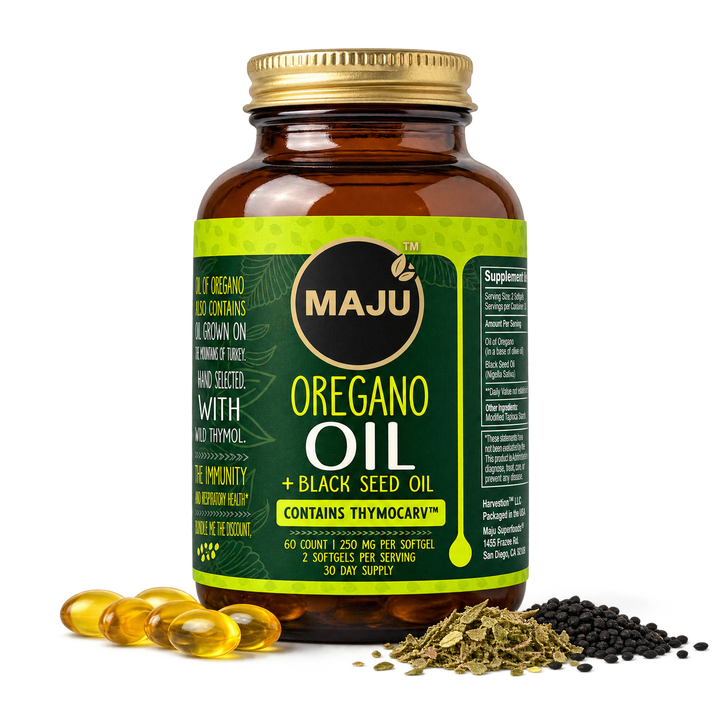
For reference, the product page for our Oil of Oregano 1oz describes oil from Origanum onites with up to 90% carvacrol content. It directs 10 drops by mouth daily, which can be diluted in a glass of water for a milder experience.
It is an oil, not a tincture, and it can still feel spicy at first. Those are label figures, not outcomes.
References
- Baranauskaite J, et al. Optimization of carvacrol, rosmarinic, oleanolic and ursolic acid extraction from oregano herbs. Nat Prod Res. 2016.
- Coccimiglio J, et al. Antioxidant, antibacterial, and cytotoxic activities of the ethanolic Origanum vulgare extract and its major constituents. Oxid Med Cell Longev. 2016.
- Llana-Ruiz-Cabello M, et al. A subchronic 90-day oral toxicity study of Origanum vulgare essential oil in rats. Food Chem Toxicol. 2017.
Written by Jennifer Wright, Content Editor at MAJU Superfoods. Researched and sourced under our editorial standards. Last updated November 2026.
These statements have not been evaluated by the Food and Drug Administration. This product is not intended to diagnose, treat, cure, or prevent any disease.
Ready to try Maju?
Browse our best sellers. Free US shipping on orders $75+.
Shop best sellers