Oregano Oil Side Effects: What to Know Before You Take It

Short answer
Oregano oil side effects are usually mild and tied to its strength: heartburn, stomach upset, a burning feeling, and sometimes a mild rash. Taking it with food and staying within the label amount may help, and liquid oil should never be taken undiluted. Pregnant women and anyone on blood thinners or diabetes medication should check with a doctor first.
Oregano oil is a potent plant extract, so it pays to know what it can do to your body before the first dose.
In this article
- Why can oregano oil cause side effects?
- What side effects are reported?
- Can oregano oil cause an allergic reaction?
- Does oregano oil interact with medications?
- How can you reduce oregano oil side effects?
- Side effects at a glance
- Who should avoid oregano oil or ask a doctor first?
- Frequently asked questions
Why can oregano oil cause side effects?
The main active compound in oregano oil is carvacrol, a strong phenol that gives the oil its sharp smell and taste. If you want the full background, see our guide to what carvacrol is. Phenols are irritating by nature. On skin, mouth lining, and the stomach wall, a concentrated dose can sting.
Most side effects come from three things: the oil is concentrated, it is often taken on an empty stomach, and people take more than the label suggests. Fix those three and many problems disappear.
What side effects are reported?
Reported effects include the following. Available evidence does not establish reliable rates or a frequency ranking for oral oregano oil supplements.
- Heartburn or acid reflux. Oregano oil can irritate the esophagus, especially if you lie down soon after taking it.
- Upset stomach, nausea, or loose stools. Higher amounts or an empty stomach make this more likely.
- Burning in the mouth or throat. Mostly a problem with liquid drops that are not diluted.
- Oregano burps. A strong herbal aftertaste that lingers for an hour or two.
- Headache or dizziness. Reported by some people, particularly after taking more than the label amount.
These effects tend to fade once you lower the amount or take the oil with a meal. If they do not, stop and talk to a healthcare professional.
Can oregano oil cause an allergic reaction?
Yes. Oregano belongs to the mint family (Lamiaceae), so people who react to mint, basil, sage, thyme, or lavender are more likely to react to it as well. Signs include a rash, itching, swelling of the lips or face, or trouble breathing. Anything involving the face or breathing needs urgent medical care.
Liquid oil on bare skin can also cause contact irritation. Never apply it undiluted, and keep it away from your eyes and the inside of your nose.
Does oregano oil interact with medications?
Research on oregano oil and drug interactions is limited, so caution is the sensible default. A few areas deserve attention. Studies suggest oregano compounds may affect blood sugar, so people on diabetes medication should monitor closely. Some plant extracts may influence blood clotting, which matters if you take warfarin or other blood thinners. Oregano may also reduce the absorption of iron and other minerals when taken in large amounts over time.
If you take prescription medication, show your pharmacist the supplement label before you start. You can search the current literature yourself on PubMed.
How can you reduce oregano oil side effects?
A few habits make a real difference:
- Take it with food. A meal buffers the stomach. Our post on how to use oil of oregano covers this in more detail.
- Start low. Begin at or below the label amount and build only if you feel fine. See oregano oil dosage for typical ranges.
- Avoid direct mouth contact. A capsule keeps the oil off your mouth and throat, but it may still cause stomach symptoms. Never take liquid oil undiluted.
- Stay upright. Avoid lying down right after taking it.
- Drink water. A full glass helps the capsule travel down comfortably.
If you are weighing formats, read how to choose an oregano oil supplement.
Side effects at a glance
| Side effect | What usually helps |
|---|---|
| Heartburn | Take with food, stay upright, lower the amount |
| Stomach upset | Take with a meal, start with less |
| Mouth or throat burning | Switch to capsules or dilute well |
| Skin irritation | Never apply undiluted, patch test first |
| Allergic reaction | Stop and seek care, avoid if allergic to the mint family |
| Medication interaction | Ask a pharmacist or doctor before starting |
If you are also considering black seed oil, our black seed oil side effects guide covers that side of the pairing.
Who should avoid oregano oil or ask a doctor first?
Talk to a doctor before using oregano oil if any of these apply to you:
- You are pregnant or breastfeeding. Concentrated oregano oil is generally advised against in pregnancy.
- You take blood thinners, or you have a bleeding disorder or surgery coming up.
- You have diabetes or take medication that lowers blood sugar.
- You have GERD, ulcers, or another stomach condition.
- You are allergic to plants in the mint family.
- You are giving it to a child. Do not give concentrated oregano oil to children without medical guidance.
Many clinicians suggest stopping herbal supplements ahead of planned surgery, so tell your surgeon what you take. This is general guidance, not a substitute for advice that fits your health history.
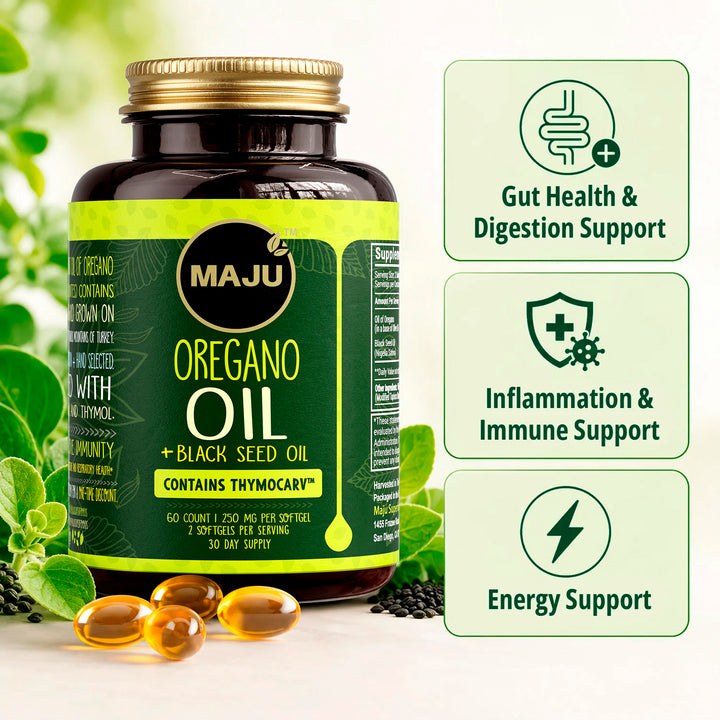
Capsules avoid direct mouth contact with the oil but may still cause gastrointestinal symptoms.
Shop Oregano Oil CapsulesFrequently asked questions
Is oregano oil safe to take daily?
Many people take it short term without trouble, but long-term safety data is limited. Our oregano oil dosage guide explains typical amounts. Check with your doctor if you plan to use it for months.
Why does oregano oil burn my stomach?
Carvacrol is irritating, and an empty stomach has no food to buffer it. Taking it with a meal and lowering the amount may help. A capsule avoids mouth contact but can still upset the stomach.
Can oregano oil make you feel sick?
It can cause nausea in some people, especially at higher amounts or without food. If nausea continues after you adjust, stop and ask a healthcare professional.
What are the signs I should stop taking oregano oil?
Stop if you develop a rash, swelling, trouble breathing, persistent vomiting, or severe stomach pain. Seek medical care right away for breathing trouble or facial swelling.
Written by Jennifer Wright, Naturopathic Editor at MAJU Superfoods. Last updated November 2026.
These statements have not been evaluated by the Food and Drug Administration. This product is not intended to diagnose, treat, cure, or prevent any disease.
Ready to try Maju?
Browse our best sellers. Free US shipping on orders $75+.
Shop best sellers