Oregano Oil Benefits for Women: What the Evidence Covers

Short answer
We found no human trial showing a women-specific benefit from oral oregano oil. The research that exists is lab work on Candida and small studies of other oregano-family preparations, none testing oral oregano oil. If you are pregnant, nursing or managing a gynecologic condition, talk to a clinician first.
Who should check with a doctor before taking oregano oil?
The NIH’s National Center for Complementary and Integrative Health notes that many dietary supplements have not been tested in pregnant women or nursing mothers. It also notes that supplements can interact with medications or pose risks with certain medical conditions (NCCIH, Using Dietary Supplements Wisely).
Those precautions apply to oregano oil too. A clinician should weigh in first if you are:
- pregnant, trying to conceive or breastfeeding
- taking prescription medication, or scheduled for surgery
- living with a diagnosed condition you are managing with a doctor
- allergic to oregano, mint, basil, thyme or other plants in the same family
Our guide to oregano oil side effects covers the common digestive complaints, and oregano oil and gut health looks at the stomach-related research.
What have researchers studied instead of oral oregano oil?
A PubMed search for oregano and women-specific outcomes turns up studies of other preparations. These three tested different things:
- Candida in a dish. A Brazilian laboratory study found Origanum vulgare essential oil inhibited Candida isolates in vitro, meaning in a lab dish (Cleff et al., 2010). The isolates included strains from animals. The oil was a distilled essential oil whose main compound was 4-terpineol, not a carvacrol-rich capsule.
- A vaginal tablet. A 2025 trial compared an herbal vaginal tablet containing oregano and lemon balm extracts with metronidazole for bacterial vaginosis (Mesdaghinia et al., 2025). It was a medicated product used locally, so it says nothing about swallowing a softgel.
- Marjoram tea. A small pilot of 25 women with polycystic ovary syndrome tested marjoram (Origanum majorana) tea, a different plant from the oregano used for oil. The authors called for further research (Haj-Husein et al., 2016).
None of these shows that swallowing oregano oil balances hormones, clears a yeast overgrowth or eases cycle symptoms, and this article does not make those claims.
What should you check on an oregano oil capsule label?
Start with the ingredient list and the amount per serving.
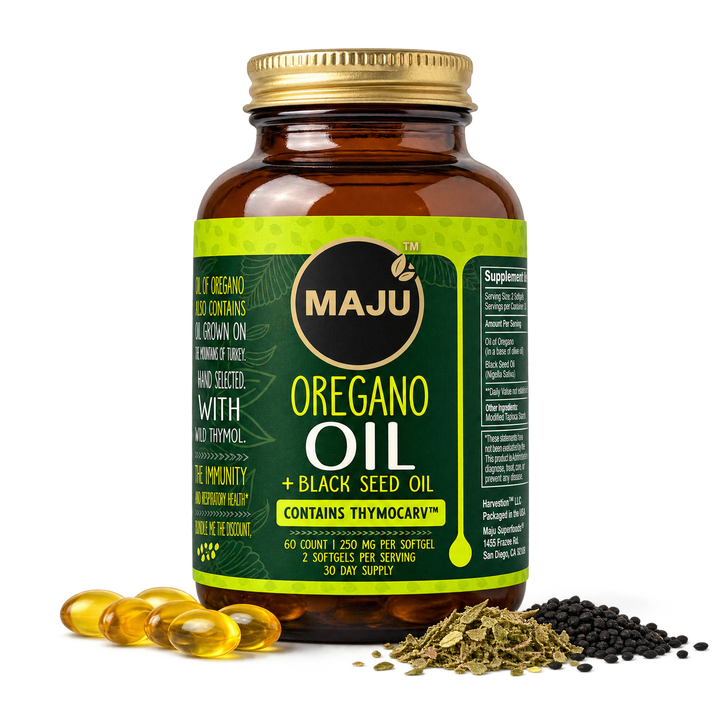
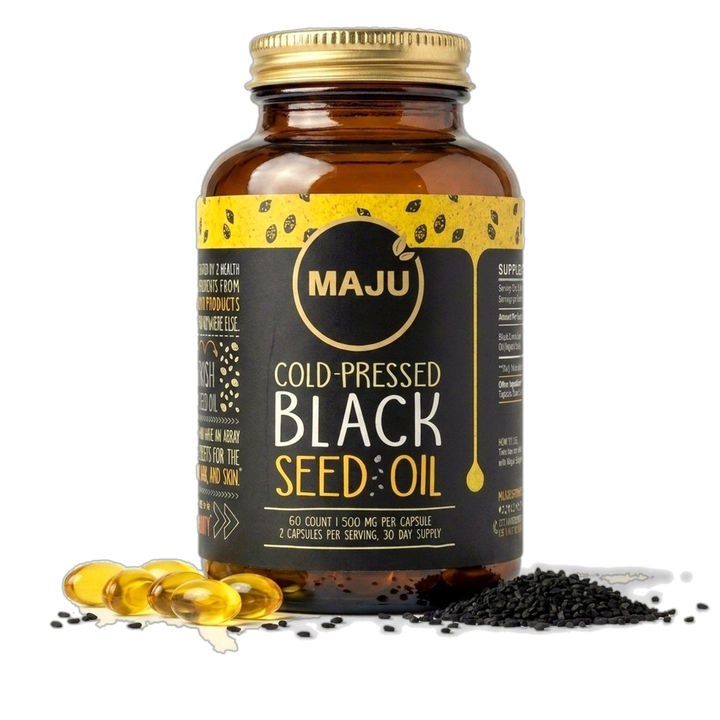
The MAJU Oregano Oil Capsules with Black Seed Oil list 300 mg of oil of oregano in a wild olive oil base plus 200 mg of black seed oil per 2-softgel serving, with 30 servings in the 60-count jar, according to the live product page. For background on the active compound, see what carvacrol is.
MAJU Oregano Oil Capsules with Black Seed Oil
300 mg oil of oregano and 200 mg black seed oil per 2-softgel serving. Check the label and ask your clinician first if any of the situations above apply to you.
See the capsulesHow can you judge oregano oil claims aimed at women?
Search results for this topic tend to promise hormone balance, yeast relief or period comfort. Three questions cut through most of that marketing:
- Does the claim name a study of this exact preparation, in people?
- Was the outcome measured in humans, or only in a laboratory dish?
- Does the page say who should not take the product?
If the answer to any of these is no, treat the claim as unproven. For timing questions, see when to take oregano oil.
Persistent vaginal discharge, itching, pelvic pain or irregular periods deserve a proper diagnosis rather than a supplement.
References
- Cleff MB et al. In vitro activity of Origanum vulgare essential oil against Candida species. Braz J Microbiol. 2010. PMID 24031471
- Mesdaghinia E et al. Efficacy of an herbal vaginal tablet containing oregano and lemon balm on bacterial vaginosis in comparison to metronidazole. J Pharmacopuncture. 2025. PMID 41477283
- Haj-Husein I et al. The effect of marjoram (Origanum majorana) tea on the hormonal profile of women with polycystic ovary syndrome. J Hum Nutr Diet. 2016. PMID 25662759
- NCCIH. Using Dietary Supplements Wisely
Written by Jennifer Wright, Content Editor at MAJU Superfoods. Researched and sourced under our editorial standards. Last updated November 2026.
These statements have not been evaluated by the Food and Drug Administration. This product is not intended to diagnose, treat, cure, or prevent any disease.
Ready to try Maju?
Browse our best sellers. Free US shipping on orders $75+.
Shop best sellers