Organic vs Non Organic Black Seed Oil: What Differs

Short answer
An organic label on black seed oil means the seeds were farmed under USDA organic rules and checked by a certifier. It says nothing about how much thymoquinone is in the bottle or whether the oil was cold pressed. Compare the certifier, the press method and batch testing, not the word “organic” alone.
Which label terms tell you what?
| Label term | What it tells you | What it does not tell you |
|---|---|---|
| USDA Organic | Crop and handling met organic standards, verified by a certifier | TQ content, press method or freshness |
| Cold-pressed | How the oil was extracted, as the seller describes it | Whether the seeds were organic |
| Unrefined | The oil was not further processed after pressing | Purity from contaminants |
| Non-GMO | The seller states no genetically modified material | Anything about pesticides |
| Third-party tested | An outside lab tested a batch | Which tests were run, unless you read the report |
“Tested” only helps if you can open the certificate of analysis and see what was measured.
How do you know an organic claim is real?
In the United States, the USDA’s National Organic Program sets national standards for organically produced agricultural products. It also accredits third-party organizations that certify farms and businesses meet those standards (USDA Agricultural Marketing Service).
A real organic claim shows the USDA seal and the name of the certifier on the package. A bottle that says “pure” or “natural” in a product description has not been certified by anyone.
Is organic black seed oil better than non-organic?
We searched PubMed in November 2026 and found no study comparing organic with conventional black seed oil. The closest evidence comes from organic food in general, and it points in different directions.
A 2012 Stanford systematic review (a study that collects and weighs all the research on one question) covered 17 human studies and 223 studies of nutrient and contaminant levels in foods. It found no strong evidence that organic foods are significantly more nutritious. The risk of detectable pesticide residues was lower in organic produce, but differences in the risk of exceeding legal limits were small (Smith-Spangler et al., 2012).
A 2014 meta-analysis (a review that pools the numbers from many studies) of 343 publications took a more favorable view of organic crops. It reported higher levels of several antioxidants, lower cadmium and fewer pesticide residues in organically grown crops (Barański et al., 2014).
Both reviews looked at crops and foods, not pressed seed oil, so neither tells you what happens to an oil. If you choose organic to avoid pesticide residues, that is the point the evidence supports best.
Does organic black seed oil have more thymoquinone?
Thymoquinone (TQ) is the compound most often discussed in black seed research. A German lab tested six black seed oils and five black seed oil capsules. TQ content ranged from 3.08 to 809.4 mg per 100 g across those eleven products.
The authors argued that black seed products should be regulated for TQ content so buyers know what they are getting (Khaikin et al., 2022).
That is a very wide range. The abstract does not say whether organic status explained any of it, so you cannot assume an organic label means more TQ. A lab report that lists TQ tells you more than a seal does. Our guide to what thymoquinone is explains the compound.
Is MAJU’s black seed oil organic?
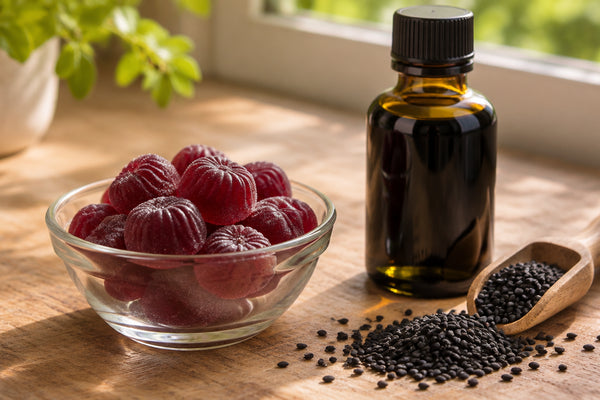
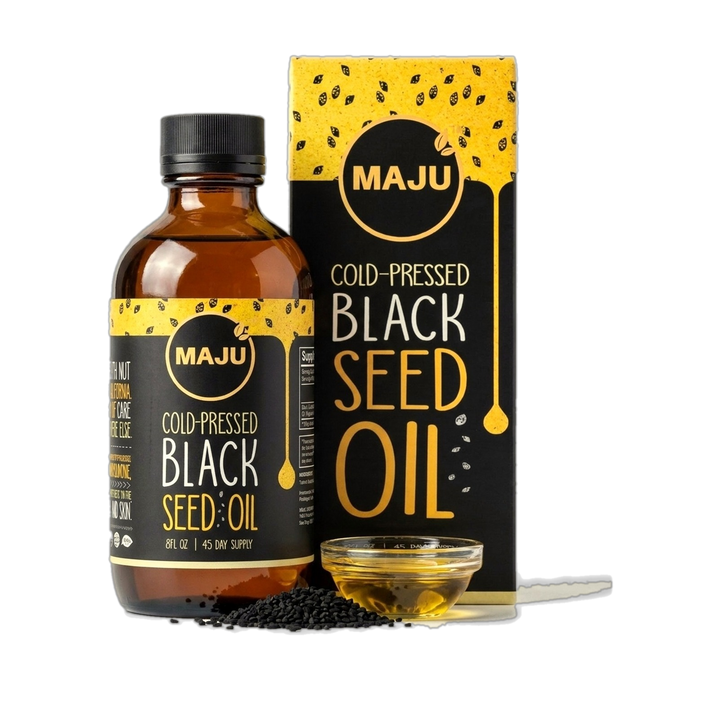
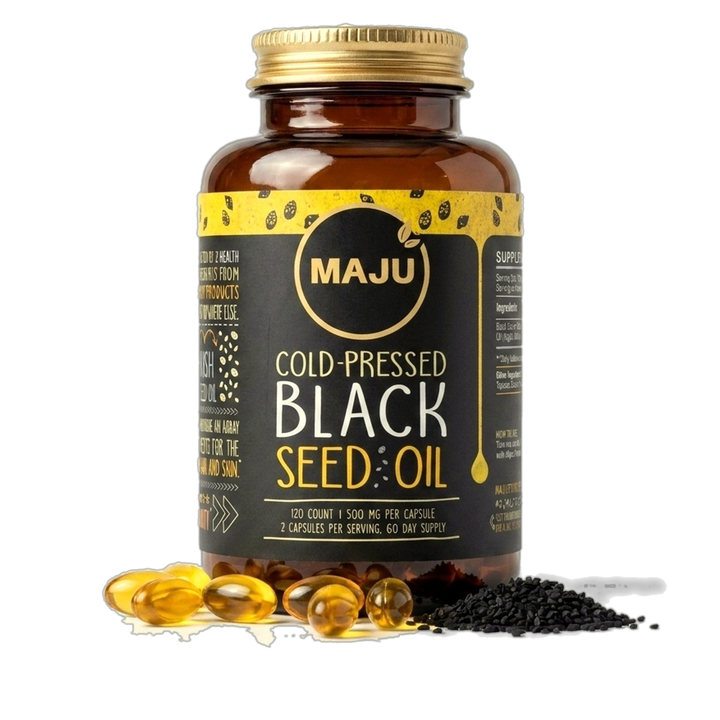
No organic claim is made for it. MAJU’s cold-pressed black seed oil page describes the oil as cold-pressed from Nigella sativa seeds, 100% pure, unrefined and non-GMO, in an 8 oz glass bottle.
The page says every batch is third-party tested and links a certificate of analysis.
The page calls the oil high in thymoquinone but gives no figure, so we are not quoting one. For general background, see how to buy black seed oil, black seed oil benefits and black seed oil side effects, and the certificates of analysis page.
If you want organic, look for the USDA seal and the certifier’s name. If you care about thymoquinone, ask for a lab report that lists it.
References
- USDA Agricultural Marketing Service. National Organic Program.
- Smith-Spangler C, et al. Are organic foods safer or healthier than conventional alternatives?: a systematic review. Ann Intern Med. 2012. PubMed 22944875
- Barański M, et al. Higher antioxidant and lower cadmium concentrations and lower incidence of pesticide residues in organically grown crops: a systematic literature review and meta-analyses. Br J Nutr. 2014. PubMed 24968103
- Khaikin E, et al. Screening of Thymoquinone Content in Commercial Nigella sativa Products to Identify a Promising and Safe Study Medication. Nutrients. 2022. PubMed 36079759
- MAJU Superfoods. Black Seed Oil 8oz, Cold-Pressed product page.
Written by Jennifer Wright, Content Editor at MAJU Superfoods. Researched and sourced under our editorial standards. Last updated November 2026.
These statements have not been evaluated by the Food and Drug Administration. This product is not intended to diagnose, treat, cure, or prevent any disease.
Ready to try Maju?
Browse our best sellers. Free US shipping on orders $75+.
Shop best sellers