Black Seed Oil for Women: What the Trials Actually Show

Short answer
Black seed oil for women has been tested in two small randomized trials of 60 women each, one in polycystic ovary syndrome (PCOS) and one in menopause. They measured different outcomes, and neither establishes a broad benefit. Anyone who is pregnant, nursing or on medication should check with a clinician first.
Who should check with a doctor before taking black seed oil?
The NIH’s National Center for Complementary and Integrative Health notes that many dietary supplements have not been tested in pregnant women or nursing mothers, and that supplements can interact with medicines or pose risks with certain medical conditions (NCCIH, Using Dietary Supplements Wisely). Ask a clinician first if you are:
- pregnant, trying to conceive or breastfeeding
- taking prescription medication, including medicine for blood sugar
- managing a diagnosed condition such as PCOS or a menopause-related symptom
- scheduled for surgery
Our guide to black seed oil side effects covers the commonly reported digestive complaints.
Does black seed oil help with PCOS?
In one small trial, women with PCOS who took black seed oil had lower inflammation and blood sugar than women who took a placebo.
The 2026 trial was randomized, double-blind and placebo-controlled. It gave 60 women with PCOS either 1,000 mg of Nigella sativa oil daily or a placebo for 12 weeks (Jamshidian and Jalilvand, 2026).
The black seed oil group had lower levels of IL-6, an inflammation marker, and lower blood sugar after fasting (about 8 mg/dL lower after adjustment). The time between periods was also shorter in that group.
Several measures did not differ: fasting insulin, how well the body responds to insulin, levels of luteinizing hormone and total testosterone, and menstrual duration.
The authors describe the findings as supporting a possible adjunctive role (an add-on to usual care) and say larger trials are needed. Nothing here shows that oral black seed oil treats, cures or prevents PCOS, and PCOS needs a clinician’s management.
What about black seed oil and menopause?
The menopause trial tested the oil on the skin, not as a capsule. It was a triple-blind trial in 60 menopausal women, and it looked at urinary incontinence (Alizadeh et al., 2023).
The women applied 2 to 3 drops of Nigella sativa seed oil to the lower abdomen twice a day for eight weeks, so it was a topical use. Mixed incontinence scores and incontinence-related quality of life improved compared with placebo. Stress incontinence, urge incontinence, sexual function and menopause-specific quality of life did not differ.
The authors say further studies are needed before drawing firm conclusions. That trial cannot be transferred to swallowing a softgel, and it does not show that black seed oil helps hot flashes or any other menopause symptom.
What we did not find
- Both trials were small (60 women each), short (8 to 12 weeks) and run in Iran. Replication in other populations is needed.
- The PubMed search for this guide found no human trial of oral black seed oil for period pain, hormone balance or fertility, so no claim is made there.
For the wider picture across conditions, see black seed oil benefits: what the studies show and black seed oil dosage.
Does the MAJU gelcap match the PCOS trial?
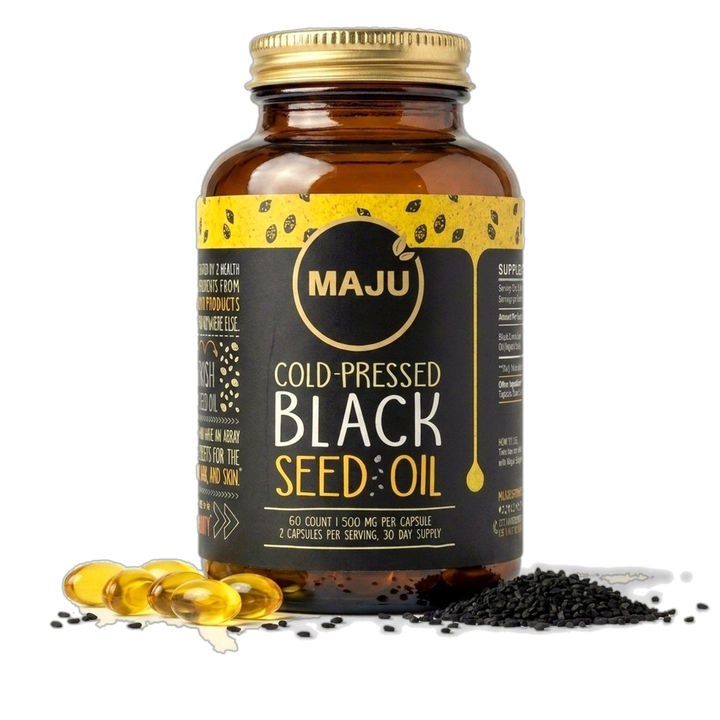
On paper, the amount does. The PCOS trial used 1,000 mg of black seed oil per day. According to the live product page, 2 of the MAJU Black Seed Oil Gelcaps deliver 1,000 mg of cold-pressed black seed oil from seeds grown in Turkey.
The match ends there. The trial tested its own oil in a specific group of women with PCOS, so its results do not carry over to the product. For background on the compound people usually ask about, see what thymoquinone is.
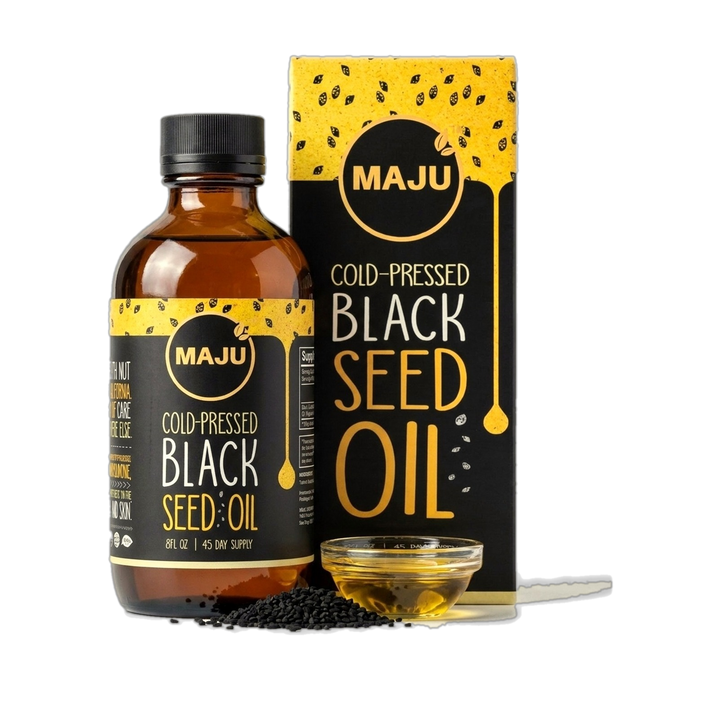
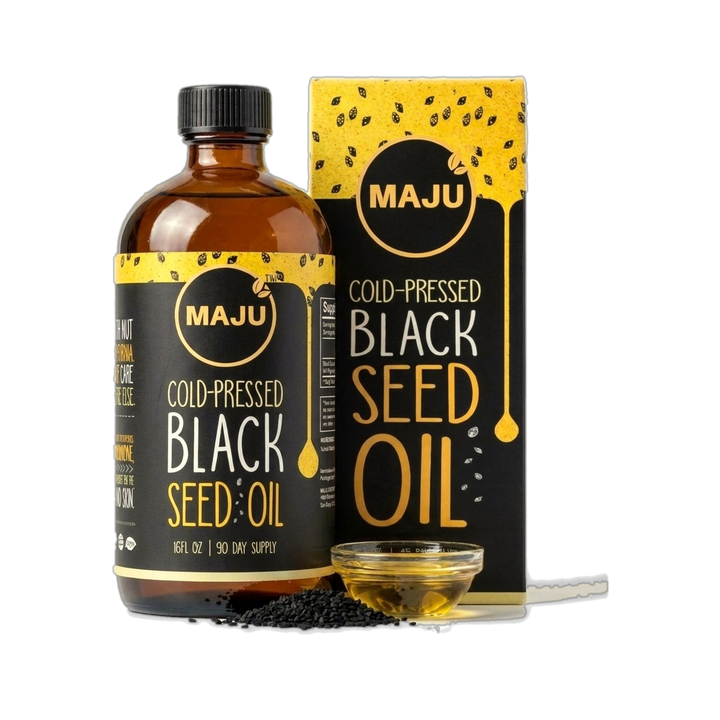
MAJU Black Seed Oil Gelcaps
Cold-pressed black seed oil from Turkish seeds: 1,000 mg per 2-gelcap daily serving. Read the label and ask your clinician first if any of the situations above apply to you.
See the gelcapsIf you fall into any group in the first list, bring this guide and the product label to your clinician before you start.
References
- Jamshidian S, Jalilvand F. Nigella sativa (black seed) oil alleviates the serum levels of IL-6 and insulin in patients with polycystic ovary syndrome. J Obstet Gynaecol Res. 2026;52(8):e70442. PMID 42601227
- Alizadeh A, Mohammad-Alizadeh-Charandabi S, Khodaie L, Mirghafourvand M. Effect of Nigella sativa L. seed oil on urinary incontinence and quality of life in menopausal women: a triple-blind randomized controlled trial. Phytother Res. 2023;37(5):2012-2023. PMID 36640148
- NCCIH. Using Dietary Supplements Wisely
Written by Jennifer Wright, Content Editor at MAJU Superfoods. Researched and sourced under our editorial standards. Last updated November 2026.
These statements have not been evaluated by the Food and Drug Administration. This product is not intended to diagnose, treat, cure, or prevent any disease.
Ready to try Maju?
Browse our best sellers. Free US shipping on orders $75+.
Shop best sellers