Black Seed Oil Capsules Third-Party Tested: What to Check

Short answer
A "third-party tested" label on black seed oil capsules is hard to assess without a report showing what was tested. A real certificate of analysis names the lot, the lab, the test methods and the actual results. Ask for it, match the lot number on your bottle, and treat a missing report as a reason to keep looking.
What should a certificate of analysis show?
FDA's manufacturing rules describe what a reliable supplier certificate includes: the test methods used, the test limits and specifications, and the actual results. The manufacturer also qualifies the supplier and re-confirms its results over time (21 CFR 111.75).
Those elements make a sensible checklist for any report you are handed.
| Check | What to look for |
|---|---|
| Lot number | Matches the lot printed on your bottle, not a generic sample. |
| Product and species | Names the product and identifies the oil as Nigella sativa seed oil. |
| Methods and limits | Each result lists the method used and the acceptable limit. |
| Actual results | A result alongside the applicable limit or specification. |
| Contaminant panels | Heavy metals, pesticides and microbial contaminants, where relevant to the form. |
| Active compounds | If thymoquinone is reported, it names the method (for example HPLC) and the units. |
| Date and lab | A test date and an identifiable lab. |
A report missing several of these is not proof of a bad product, but it gives you less to go on.
Who checks supplement quality in the first place?
Mostly the company that sells it. According to the FDA, supplement manufacturers and distributors are responsible for evaluating the safety and labeling of their products before marketing, and the agency can act against adulterated or misbranded products after they reach the market (FDA, Dietary Supplements).
That is why a shareable test report matters. "Third-party tested" on its own does not say what was tested, on which batch, or what the result was.
What a clean report cannot tell you
A certificate describes one batch on the day it was tested. It does not show that the capsules will do anything for you.
A 2021 review of the Nigella research states that more clinical trials are needed to establish the active molecules, dosage, chemical profile and long-term effects (Salehi et al., 2021). Our guide to what the black seed oil studies show covers the evidence.
Storage matters after testing, too. A 2022 review reports that black seed oil has low oxidative stability, affected by temperature and light (Rahim et al., 2022). Heat and light can affect the oil after testing, so follow the storage directions.
If you are pregnant, take prescription medication or have a health condition, speak to your clinician first. Our black seed oil side effects guide lists the points to raise.
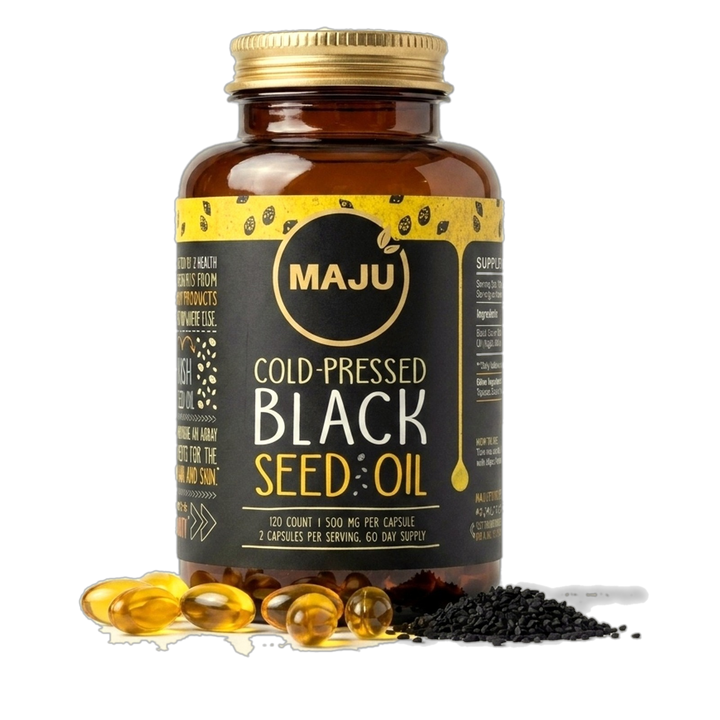
Where is the report for MAJU's black seed oil capsules?
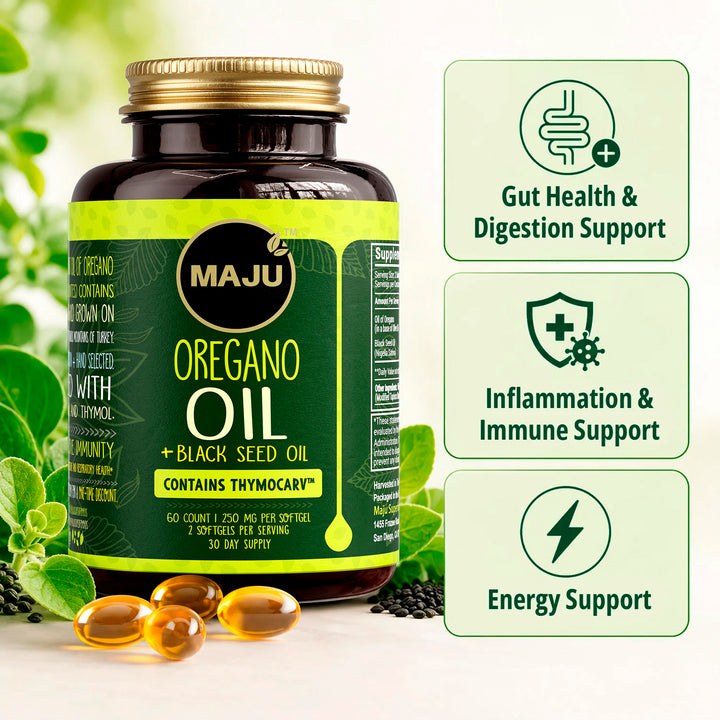
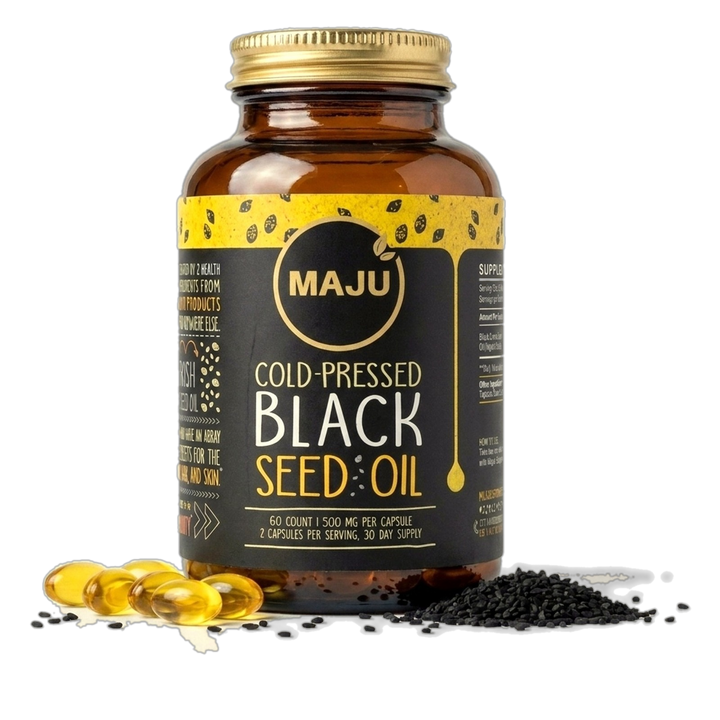
MAJU publishes batch reports on its Certificate of Analysis page. Find the lot number on your bottle, then look under Capsules, Black Seed Oil Capsules, 60 Count, where the current lot numbers are listed.
According to that page, a certificate outlines ingredient purity, active compound levels and testing for heavy metals, pesticides and other contaminants in each batch.
The gelcaps product page says the seeds come from a family-owned farm in Turkey, are slowly cold-pressed, and that each batch is tested by high-performance liquid chromatography for key chemical compounds. Two gelcaps a day provide 1,000 mg of black seed oil, according to the label.
Comparing formats before you buy? Read black seed oil capsules vs liquid and our buying guide. For how much to take, see black seed oil dosage.
References
- U.S. Food and Drug Administration. Dietary Supplements.
- eCFR. 21 CFR 111.75, What must you do to determine whether specifications are met?
- Rahim MA, et al. A Narrative Review on Various Oil Extraction Methods, Encapsulation Processes, Fatty Acid Profiles, Oxidative Stability, and Medicinal Properties of Black Seed (Nigella sativa). Foods. 2022. PubMed 36140949
- Salehi B, et al. Nigella Plants - Traditional Uses, Bioactive Phytoconstituents, Preclinical and Clinical Studies. Front Pharmacol. 2021. PubMed 33981219
- MAJU Superfoods. Certificate of Analysis and Black Seed Oil Gelcaps product page.
Written by Jennifer Wright, Content Editor at MAJU Superfoods. Researched and sourced under our editorial standards. Last updated November 2026.
These statements have not been evaluated by the Food and Drug Administration. This product is not intended to diagnose, treat, cure, or prevent any disease.
Ready to try Maju?
Browse our best sellers. Free US shipping on orders $75+.
Shop best sellers